
European Business Guide

Company Formation in Bulgaria for Non-Residents

A practical guide for international entrepreneurs considering a Bulgarian EOOD or OOD company, including ownership, registered address, incorporation documents, VAT, accounting, business-account preparation and considerations for remote entrepreneurs and digital nomads.

Company formation in Bulgaria for international entrepreneurs and non-resident founders

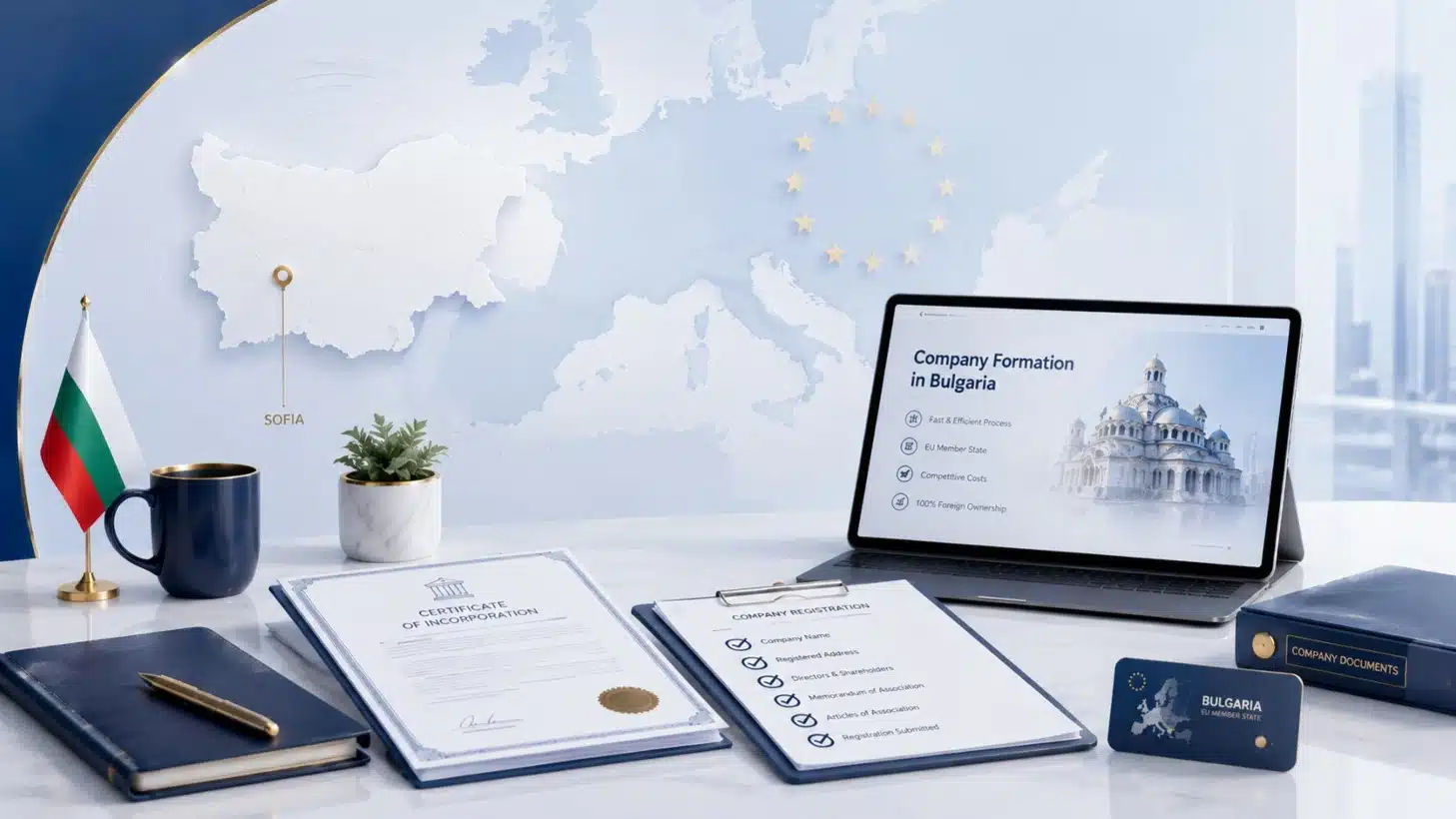
Bulgarian company formation for international entrepreneurs, including EOOD and OOD registration, company documents and preparation for operating within the European Union.

Can a Non-Resident Form a Company in Bulgaria?

Bulgaria provides company structures that can be used by international entrepreneurs and foreign investors. The most common limited-liability structures for smaller privately owned businesses are the EOOD and OOD.

A founder living outside Bulgaria should distinguish between ownership of a Bulgarian company and the separate rules governing residence, immigration, employment, taxation and personal social-security obligations.

The Bulgarian company itself requires a registered seat and address of management in Bulgaria and must comply with Bulgarian corporate, accounting and tax requirements.

Contact BR Economy About Bulgaria
1
Foreign Ownership Is Possible International founders can consider Bulgarian company ownership without first becoming Bulgarian residents, subject to applicable company and investment rules.
2
EOOD or OOD EOOD is designed for a single owner, while OOD is the limited-liability structure used where there are two or more owners.
3
Bulgarian Address Required The company’s registered seat and address of management form part of the Bulgarian incorporation information.
4
Banking Is a Separate Process Incorporation does not guarantee approval from a Bulgarian, EU or international business-account provider.

EOOD and OOD Companies in Bulgaria

The main distinction between these two structures is the number of persons or legal entities owning the company’s capital.

EOOD

Single-Member Limited Liability Company

An EOOD is a Bulgarian limited liability company whose entire capital is owned by one person or legal entity.

  • One owner of the company capital
  • Owner may be an individual or legal entity
  • Limited-liability company structure
  • A manager is appointed to represent the company
  • Suitable where one founder controls the company
  • Minimum statutory capital can be as low as €1
OOD

Multi-Member Limited Liability Company

An OOD is a Bulgarian limited liability company with at least two owners. The owners can be individuals, legal entities or a combination of both.

  • At least two owners
  • Owners do not need equal ownership percentages
  • Ownership is divided through capital interests
  • A manager or managers represent the company
  • Suitable for businesses with multiple founders
  • Minimum statutory company capital can be €1

What Should Be Prepared Before Registration?

The precise documents depend on the ownership structure, registration method and activities of the proposed company.

Founders and Ownership

Information about the sole owner or partners must be prepared and the intended ownership structure clearly documented.

  • Full legal names of founders
  • Identity information
  • Ownership percentages
  • Capital contributions
  • Corporate documents for legal-entity owners where required

Bulgarian Company Address

The incorporation documents identify the company’s seat and address of management in Bulgaria.

  • Registered seat in Bulgaria
  • Address of management
  • Address suitable for official correspondence
  • Address maintained while the company remains registered

Manager and Representation

The company requires an appointed manager or managers and rules describing how the company will be represented.

  • Manager identification
  • Appointment resolution
  • Consent to act where required
  • Notarised signature specimen
  • Representation arrangements

From Company Structure to Registration

A Bulgarian EOOD or OOD registration commonly involves the following stages.

1

Choose EOOD or OOD

Decide whether the company will have one owner or multiple owners. A single owner normally points towards EOOD, while two or more owners use the OOD structure.

2

Choose and Check the Company Name

Select the proposed company name and check its availability before filing. Name reservation can also be used where appropriate, although it is not always a mandatory preliminary step.

3

Arrange the Bulgarian Registered Address

Prepare the company’s registered seat and address of management in Bulgaria. International founders should arrange this before the incorporation documents are finalised.

4

Prepare the Incorporation Documents

The EOOD requires an incorporation act for the sole owner, while the OOD uses articles of association between the partners.

  • Company name
  • Registered seat and address of management
  • Business activities
  • Founder or partner information
  • Company capital
  • Ownership interests
  • Management and representation arrangements
5

Appoint the Manager

The company appoints one or more managers. The manager is a natural person who represents the company and normally signs the required consent, declarations and signature specimen.

6

Arrange and Pay the Company Capital

The required capital is arranged in accordance with the incorporation documents. A special capital or escrow account may form part of the incorporation process and evidence of paid-in capital may be required for the Commercial Register.

7

File the Registration with the Commercial Register

The company is registered through the Bulgarian Commercial Register and Register of Non-Profit Legal Entities. EOOD and OOD registrations use the relevant standard application and supporting incorporation documents.

8

Organise Tax, Accounting and Business Operations

After registration, the company should organise its accounting, assess VAT obligations, establish its business account arrangements and determine any additional licences, registrations or reporting requirements relevant to its activities.

Documents Commonly Involved in Registration

The precise documentation depends on the company and its owners, particularly where a foreign legal entity participates as an owner.

Documents and Information Before Filing

  • Proposed company name
  • Founder or partner identification
  • Bulgarian registered seat and address of management
  • Business activity description
  • EOOD incorporation act or OOD articles of association
  • Incorporation resolution or constituent meeting minutes
  • Manager appointment
  • Manager consent and signature specimen
  • Required manager declarations
  • Details of company capital and ownership interests
  • Evidence of paid-in capital where required
  • Power of attorney where a representative files the application
Foreign Corporate Owners

Where a shareholder is a foreign legal entity, additional official company-register extracts and evidence identifying its legal existence and authorised representatives may be required.

Documents to Retain After Registration

  • Commercial Register registration details
  • Company identification number
  • Final incorporation act or articles of association
  • Founder or shareholder resolutions
  • Manager appointment documentation
  • Ownership and capital records
  • Capital-payment evidence
  • Tax and VAT registration documentation where applicable
  • Accounting records from commencement of activity
  • Licences or permits where relevant to the activity
Keep a Complete Company File

A well-organised company file is useful not only for statutory compliance but also when opening business accounts, applying to payment providers or responding to future KYC and ownership-verification requests.

Important Obligations After Incorporation

Company registration, VAT registration and statutory audit are separate questions and should be assessed according to the company’s actual activities and financial position.

VAT Registration

VAT registration is not automatically compulsory simply because an EOOD or OOD has been incorporated.

From 1 January 2026, the general Bulgarian compulsory VAT registration threshold for a person established in Bulgaria is annual domestic turnover exceeding €51,130.

Other VAT-registration grounds can apply depending on the company’s transactions, including certain cross-border and EU-related activities. Voluntary VAT registration may also be available.

Review VAT Before Trading

International companies should establish their VAT position before commencing substantial trading rather than assuming that the turnover threshold is the only relevant rule.

Accounting and Statutory Audit

Bulgarian companies are subject to bookkeeping and annual financial-reporting requirements. Professional accounting support is therefore an important part of maintaining the company after formation.

A statutory independent audit is not automatically required for every EOOD or OOD. Audit obligations depend on the company’s size, classification and other statutory criteria, with additional rules applying to certain types of businesses.

Accounting Is Different from Audit

A company may need ongoing accounting and annual financial statements even when it does not meet the criteria requiring an independent statutory auditor.

Preparing for a Bulgarian or EU Business Account

Registration of an EOOD or OOD does not guarantee a business account. Banks, EMIs and fintech providers apply their own eligibility, KYC, ownership and business-verification rules.

A non-resident-owned company should therefore prepare both company documentation and personal identification for the people controlling the business.

  • Commercial Register extract or company registration details
  • Company identification number
  • Incorporation act or articles of association
  • Ownership and shareholder information
  • Manager information
  • Passport or accepted identification for relevant persons
  • Residential addresses and proof of address where requested
  • Bulgarian registered company address
  • Trading or operating address where separately requested
  • Description of products or services
  • Company website where available
  • Expected transaction volumes
  • Expected currencies and countries involved
  • Source of funds or initial business capital where requested
  • Contracts, invoices or other commercial evidence where requested
Non-Resident Ownership and Banking

A provider may accept Bulgarian companies but still restrict onboarding according to the residence of directors, managers or beneficial owners. Account eligibility should therefore be checked separately from company-formation eligibility.

Digital Nomads and Remote Entrepreneurs in Bulgaria

Bulgaria has become relevant to many location-independent entrepreneurs who want a European base while operating online, consulting internationally or managing a remote business.

Bulgaria is an EU Member State and is part of the Schengen area. Since 1 January 2026, the euro is also the country’s official currency. These factors can make Bulgaria particularly interesting to entrepreneurs working across European markets.

A Bulgarian company can be one part of an international entrepreneur’s business structure, but company ownership should not be confused with residence or work rights.

EU, EEA and Swiss Citizens EU free-movement rules provide a different residence and work framework from that applying to third-country nationals.
Third-Country Nationals Visa, residence and work requirements should be checked separately according to citizenship, intended activity and length of stay.
Company Ownership Is Not Residence Forming or owning an EOOD or OOD does not by itself give the owner an automatic right to live or work in Bulgaria.
Personal Tax Position Matters Where an entrepreneur lives, works and becomes tax resident can affect personal taxation separately from the Bulgarian company’s own tax obligations.

Need Help Preparing a Bulgarian Company Registration?

BR Economy can help international founders understand the practical formation process, identify the information and documents that need to be prepared and coordinate the next steps for an EOOD or OOD registration with appropriate local service providers where required.

The exact requirements can depend on the ownership structure, business activity and the country of residence of the founder. We therefore prefer to understand the intended setup before suggesting a registration route.

Contact BR Economy

Frequently Asked Questions

Company Formation in Bulgaria for Non-Residents

Common questions from international entrepreneurs considering an EOOD or OOD company in Bulgaria.

Can a non-resident form a company in Bulgaria?

Yes. Foreign individuals and international entrepreneurs can generally own Bulgarian companies such as an EOOD or OOD without first becoming Bulgarian residents.

Company ownership should, however, be kept separate from immigration, residence, personal taxation and work-right questions. Forming a Bulgarian company does not by itself give the owner an automatic right to live or work in Bulgaria.

What is the difference between an EOOD and an OOD?

An EOOD is a Bulgarian limited liability company with one owner of the company capital.

An OOD is a Bulgarian limited liability company with at least two owners. The partners do not need to hold equal ownership percentages.

Does the Bulgarian company need an address in Bulgaria?

Yes. The incorporation information for an EOOD or OOD includes the company’s registered seat and address of management in Bulgaria.

An international founder should therefore arrange an appropriate Bulgarian company address before the incorporation documents are finalised.

What is the minimum capital for an EOOD or OOD?

The statutory minimum capital for a Bulgarian EOOD or OOD can be very low. Following Bulgaria’s adoption of the euro, the minimum company capital can be €1.

The founders may choose a higher capital amount where this is more appropriate for the intended business and ownership structure.

What documents are commonly needed to register an EOOD or OOD?

Common documentation includes founder or shareholder identification, the Bulgarian registered address, company capital information, manager appointment documents and the constitutional document for the company.

An EOOD normally uses an incorporation act for the sole owner, while an OOD uses articles of association between the partners. Manager declarations, consent and a signature specimen may also form part of the filing package.

Can a foreign company own a Bulgarian EOOD or OOD?

A legal entity can participate as an owner of a Bulgarian limited liability company.

Where the owner is a foreign company, additional official documents may be required to establish that company’s legal existence, registration and authorised representatives. Translation, certification or other formalities may also apply depending on the documents and country involved.

Is VAT registration compulsory for every Bulgarian company?

No. Incorporating an EOOD or OOD does not automatically mean that the company must immediately register for VAT.

From 1 January 2026, the general Bulgarian compulsory VAT registration threshold for a taxable person established in Bulgaria is annual domestic turnover exceeding €51,130.

Other VAT-registration rules can apply earlier depending on the company’s transactions, including certain EU and cross-border activities. Voluntary registration may also be possible.

Does every Bulgarian EOOD or OOD need an auditor?

No. A statutory independent audit is not automatically required simply because a company is registered as an EOOD or OOD.

Audit requirements depend on statutory criteria such as the company’s size, classification and other circumstances. This should not be confused with normal bookkeeping and annual financial-reporting obligations, which can still apply even when an independent audit is not required.

Does forming a Bulgarian company guarantee a business account?

No. Company registration and business-account approval are separate processes.

Banks, EMIs and fintech providers apply their own eligibility, KYC and business-verification procedures. They may consider the company’s activities, ownership, manager, countries of operation, expected transactions and the residence of the beneficial owners.

What documents can a bank request from a Bulgarian company?

Requirements vary by provider, but commonly requested documents can include Commercial Register information, the company identification number, incorporation documents, ownership information and details of the manager.

Banks and financial platforms may also request passports, proof of residential address, business activity information, expected turnover, countries and currencies involved, source of funds and supporting commercial evidence such as contracts or invoices.

Is Bulgaria suitable for digital nomads and remote entrepreneurs?

Bulgaria can be attractive to remote entrepreneurs because it provides an EU business environment and can be used as a base for online and internationally oriented businesses.

The company structure should nevertheless be considered separately from the founder’s personal residence and tax position. Where a person actually lives and works can create obligations that are different from those of the Bulgarian company itself.

Does owning a Bulgarian company give me residence in Bulgaria?

Not automatically. Ownership of an EOOD or OOD and the right to reside in Bulgaria are separate legal matters.

EU, EEA and Swiss citizens operate under a different free-movement framework from third-country nationals. Non-EU founders should check the visa and residence rules applicable to their nationality and intended activity.

Can BR Economy help with a Bulgarian company registration?

BR Economy can help international founders understand the practical registration process, the information and documents that should be prepared and the next steps for an EOOD or OOD formation.

Where local professional or registration services are required, the appropriate route can depend on the ownership structure, business activity and circumstances of the founder.

Considering a Bulgarian Company as a Non-Resident?

Contact BR Economy if you need practical guidance on EOOD or OOD formation, company documentation, Bulgarian address requirements or preparation for the next stage of registration.

Contact BR Economy

BR Economy provides general business information and practical registration guidance. We do not provide legal, tax, immigration or financial advice. Requirements can depend on the company, ownership structure, activities and individual circumstances.